

At a Glance
Post-holiday returns are surging, with refund abuse and chargeback scams cutting deep into retail profits. To fight back, smart retailers are replacing cash refunds with store credit and using AI to detect fraud before it happens. Store credit keeps revenue in the ecosystem and buys time to investigate suspicious activity. The combination of store credit + AI helps merchants modernize their return processes, protect margins, and deliver better outcomes for honest customers.
What’s Inside
Returns are inevitable. Losing revenue doesn’t have to be.
According to the National Retail Federation, returns cost U.S. retailers over $816 billion annually. And the hardest stretch is still ahead. The weeks following the holidays—often dubbed Returnuary—bring a sharp spike in refund requests, adding to the strain of an already overloaded season.
One recent study from eDesk found that return and refund volumes jump 40% between Black Friday and Christmas, overwhelming customer service operations even before the post-holiday flood begins.
As E-Commerce Times recently reported, refund abuse and chargeback scams are also on the rise—fueled by viral “hack” tutorials on social media that teach consumers how to exploit return policies.
In response, more retailers are shifting to store credit through branded gift cards, both to protect margins and maintain customer satisfaction, while also adopting AI tools to flag suspicious activity before refunds are issued.
1. Shift to Store Credit: Why Gift Cards Make Sense
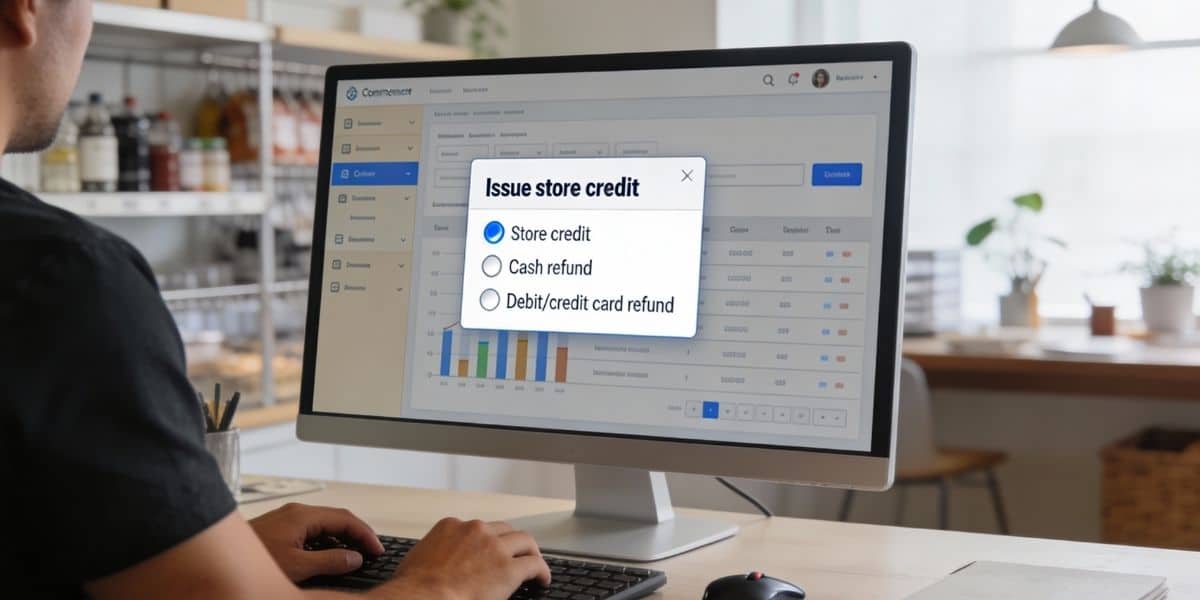
For years, retailers defaulted to cash or card refunds to preserve goodwill and streamline customer satisfaction. But in today’s landscape, where refund abuse is on the rise and profit margins are under pressure, more merchants are realizing that store credit–in the form of a digital or physical gift card–offers a smarter alternative.
Store credit keeps revenue in your ecosystem. Unlike a cash refund that leaves the business immediately, store credit converts a return into a future purchase. Often, that future transaction exceeds the original amount, as customers tend to browse and spend beyond the gift card balance.
It also buys time. Because digital gift cards can be paused or revoked before redemption, issuing them instead of cash refunds gives retailers a window to detect fraud, investigate suspicious patterns, and prevent bad actors from walking away with both the product and the money—or profiting from stolen merchandise. When the return is legitimate, the customer experience remains intact.
Retailers looking to modernize their return processes are turning to automation. With tools like eGifter’s Merchandise Returns API—already used by leading retailers—they can instantly issue digital store credit, eliminating manual steps, shortening refund wait times, and delivering a branded experience that feels like a benefit, not a downgrade.
Returns don’t have to end the customer journey. With store credit, they can restart it.
2. Use AI to Detect and Prevent Refund Abuse

As return volumes surge and refund fraud becomes more sophisticated, retailers need more than manual reviews and gut checks to protect their margins. AI brings the speed, scale, and pattern recognition that traditional tools—or even large fraud teams—simply can’t match.
Solutions like eGifter AI Shield™ are built to detect suspicious activity across gifting, rewards, appeasement, and merchandise return programs by analyzing consumer behavior through their interactions with the stored value delivered by the eGifter platform. This analysis is done in real time using AI systems that can instantly flag patterns that might otherwise go unnoticed. For example:
- Are there spikes in gift card claims linked to a specific device ID, IP address or email domain?
- Are there other atypical patterns, such as unusual concentrations of VPN use, or claim attempts from a specific geography?
- Do the specific email addresses associated with the claims have unusually low reputation scores?
These are just a few of the red flags AI can surface by analyzing historical data, support ticket language, behavioral signals, and transaction patterns at scale. Used strategically, this additional stored value layer of AI fraud detection helps merchants revoke store credit or freeze gift cards before they’re redeemed, closing the window for fraud without disrupting the experience for legitimate customers.
The findings also lead to smarter and more efficient policies that create better overall consumer experiences.
Reinventing Returns for the Realities of Retail
The holiday return season doesn’t just test inventory systems and customer service—it tests the limits of outdated refund models. In an era of tighter margins, rising fraud, and shifting consumer behavior, cash refunds simply cost too much.
Retailers that combine store credit with AI-powered fraud detection are doing more than protecting revenue—they’re creating smarter, faster, and more secure return experiences that benefit both the business and the customer. This isn’t about making returns harder. It’s about making them smarter.
If you’re ready to stop giving cash back and start turning returns into revenue, let’s talk solutions.
Until then, stay sharp this return season!
— Shelley Hunter, Gift Card Expert at eGifter